Sound Therapy & Meditation
What is Sound Therapy?
Sound Therapy is a gentle yet powerful practice that invites the body to rest, the mind to quieten and the nervous system to return to balance, through the simple, ancient language of sound.
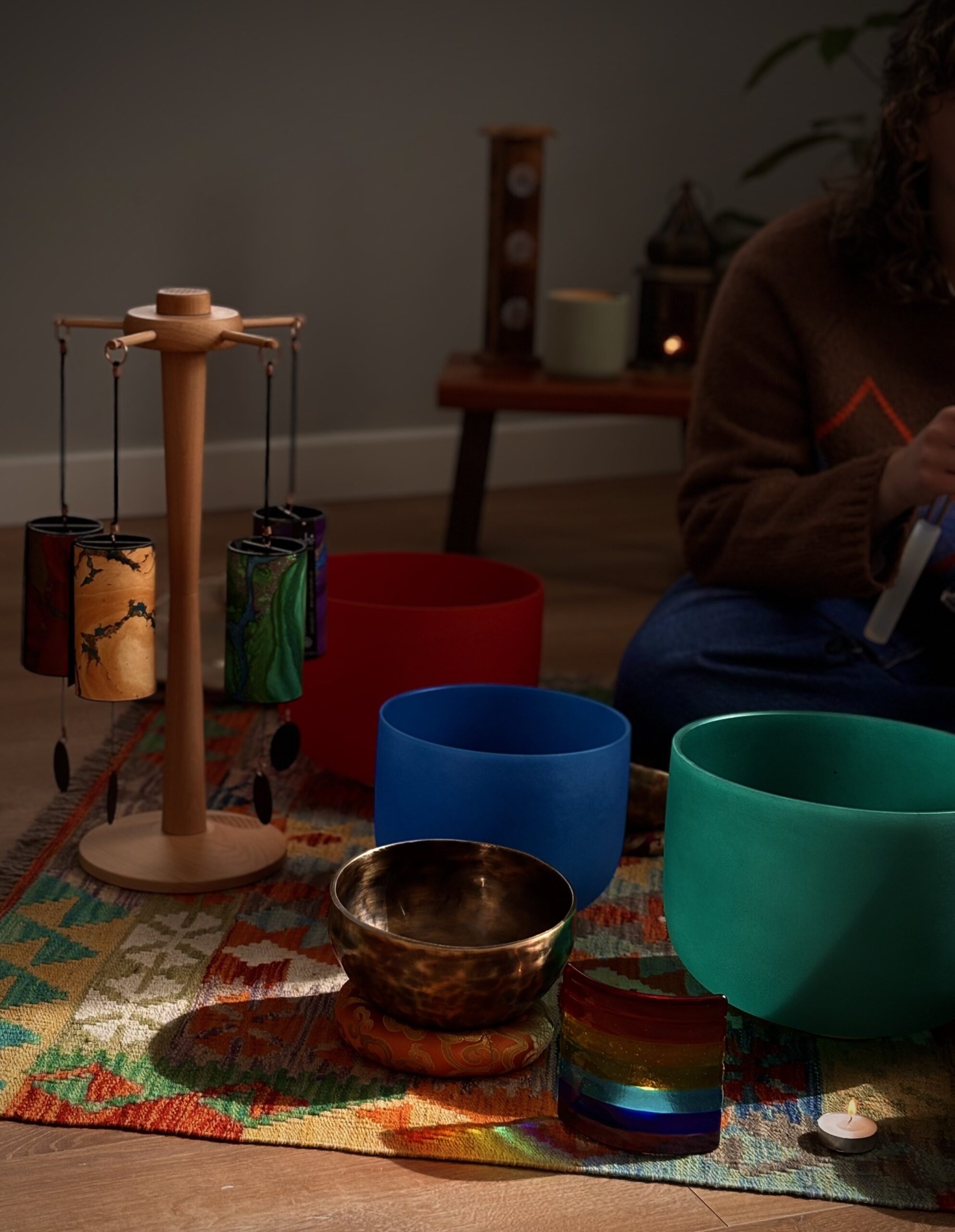
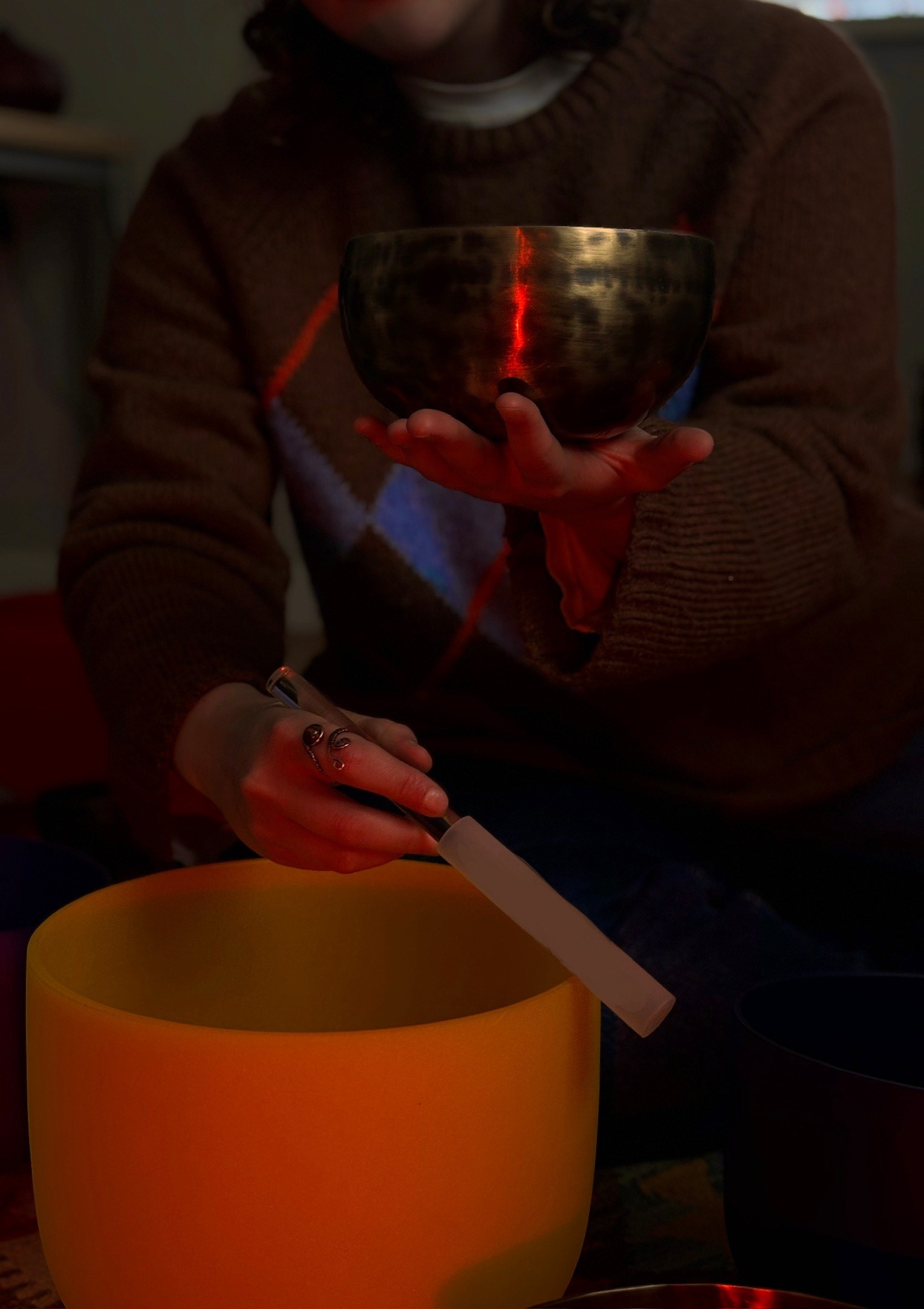
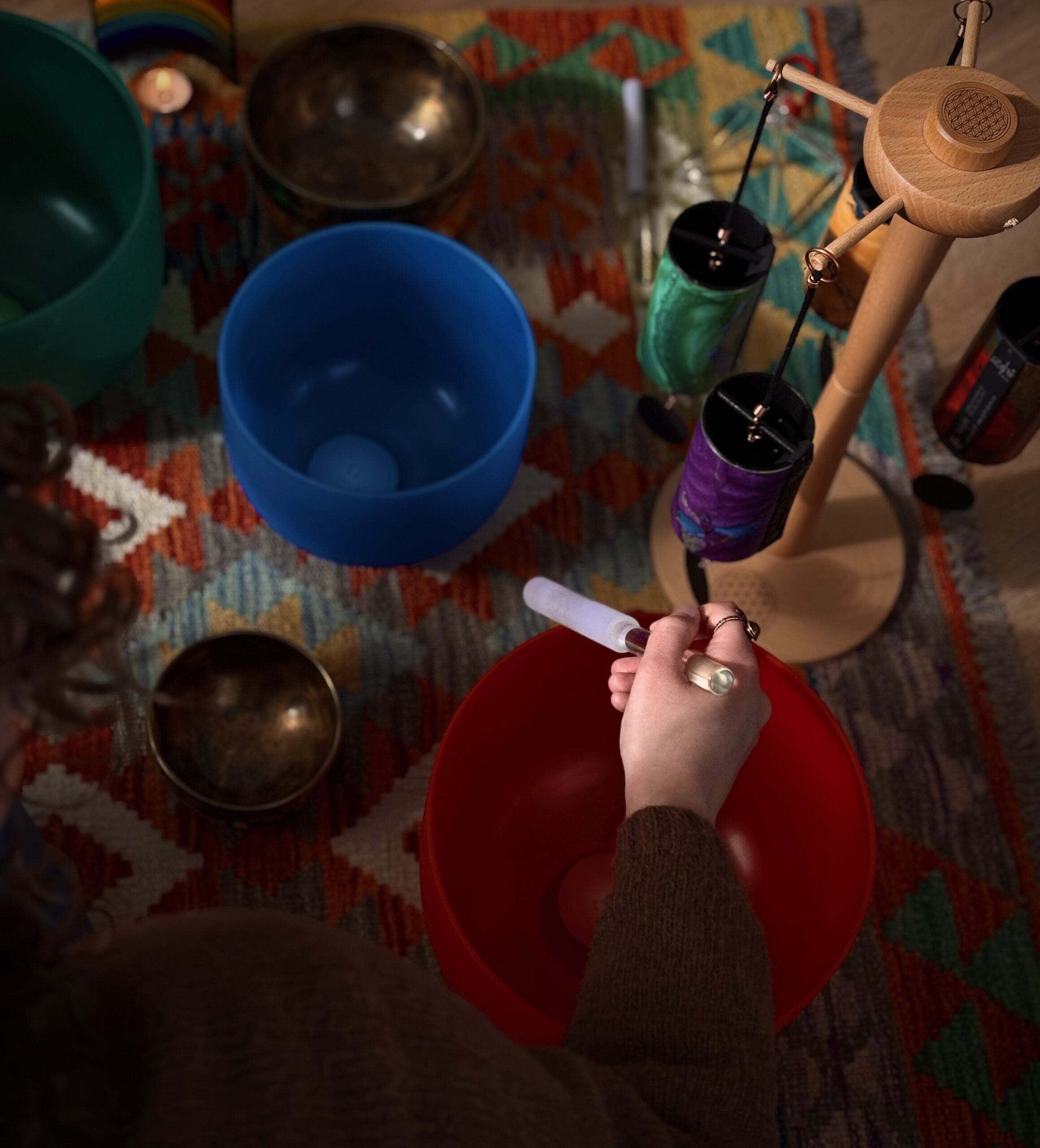
From the warm hum of crystal singing bowls to the delicate shimmer of chimes and the deep resonance of the gong, therapeutic sound has long been woven through ancient traditions as a way of returning the body and mind to a more harmonious rhythm. During a session, you are invited to get comfortable, to close your eyes and to simply allow the sound to move around and through you. You will be guided in and out of the sound bath through gentle breathwork, meditational techniques and moments of stillness, to allow time for quiet reflection and rest.
The vibrations and frequencies of a sound bath don’t ask for your attention or speak to your intellect, they find their way to the deeper currents of your being, to the breath, to the body and to the quiet places within you that remember how to be still, to rest and to feel whole.
Why Sound Therapy?
Sound affects us far beyond what we hear with our ears and modern science is beginning to echo what ancient cultures have long known – that sound can heal. It has the capacity to shift our brainwaves from thinking and doing to ones of calm and deep rest, allowing our bodies space to repair and the mind to let go and be present. When therapeutic instruments are played around or on our bodies, vibrations and sound waves are carried through us, softening tension, supporting circulation and restoring flow and balance. Each sound carries a frequency that, when used with care and intention, can speak to the part of us that needs it most, helping to shift what might feel blocked or stuck, physically, emotionally or energetically.
Some of the proven benefits of sound therapy include:
- Lowered stress hormones, like cortisol
- Reduced blood pressure
- Supports heart rate variability
- Enhances the immune response by activating the parasympathetic nervous system
- Improved sleep, focus and emotional regulation
- Stimulates the vagus nerve, supporting digestion, mood and resilience
- Helps with fatigue and chronic pain
What Sound Therapy Sessions Do We Offer?
We offer a variety of Sound Therapy sessions tailored to your needs. Whether shared in a group or held one-to-one, each session offers a journey to rest, release and renewal. Some of the sessions we offer include:
Group Sound Baths
These sessions are perfect for anyone looking to release stress and reconnect with themselves in a supportive, shared space. You will be immersed in a meditative soundscape created with instruments like crystal singing bowls, gongs and chimes, guided by gentle meditation and breathwork. After the final notes have settled, you may be invited to share in a simple tea ceremony, allowing you a quiet moment to reflect, land and return from the sound journey.
Individual 1:1 Sound Therapy Sessions
For a more tailored, personal and guided experience, individual sessions offer focused and targeted support using sound to gently guide the nervous system into a state of rest and renewal. These sessions are ideal for those working through specific emotional or physical challenges, or those simply seeking a deeper relaxation, self-awareness and inner exploration. Guided by your needs, these sessions meet you exactly where you are and are uniquely shaped by your story.
Group & Corporate Sessions
While sound therapy is generally a safe practice, it may not be suitable for everyone in every circumstance. We ask that individuals in their first trimester of pregnancy, those with epilepsy or a history of seizures, those with fitted pacemakers or metal implants, and those with any other serious medical and/or mental health conditions do not attend. If you wish to attend and have one of these conditions, we advise you to speak to a medical professional prior to participating.
In addition, if you currently experience or have a history of serious health issues, you should let us know prior to the session so that we can ensure we provide an appropriate, safe and inclusive session.
It is important that you feel comfortable, relaxed and at ease throughout the session so we recommend that you wear loose, comfortable clothing that allows you to fully relax whilst lying or sitting. Layers are a good idea as your body temperature may drop as you enter a deep state of rest. Warm socks, cosy jumpers, soft scarves and blankets are all welcome.
We ask that you bring:
- A yoga mat or something comfortable to lie on
- A blanket and/or cushion for extra comfort and warmth
- An eye pillow or scarf to block out light if you wish
- A water bottle to stay hydrated, especially after the session
Please note that we will try to supply a few spares of these items for anyone who needs them.
Sound therapy is a gentle and non-invasive practice and most people leave a session feeling deeply relaxed, calm and centred. However, because sound works on both physical and energetic levels, some people may experience some after-effects. For instance, you may experience an emotional release (which, whilst completely normal and part of the body’s healing process, it can feel sensitive, tender and emotional). Some people experience fatigue or sleepiness and sometimes people experience physical sensations like tingling or temperature changes. These sensations usually pass within a few hours and staying hydrated, resting or spending time in nature can help support the integration process.
Occasionally, a session may stir old memories, buried emotions or energetic blockages – this can be an important part of the body releasing and healing but if anything feels overwhelming you can always reach out for support. If you have a history of mental health issues, trauma or medical conditions, you should let us know prior to the session so we can ensure the experience is as safe and supportive as possible.
There is no one-size-fits-all answer, how often you attend sound therapy will depend on your intentions, circumstance and how your body responds.
Many people find that attending a sound bath once or twice a month helps maintain a sense of balance and calm and is a gentle way to carve out regular time for stillness and self-care. If you’re moving through a period of stress, transition or healing, you might benefit from more frequent sessions to support grounding and emotional processing. For some, they simply return to sound therapy when they feel intuitively drawn to the sound space – trust your body’s wisdom as it often knows when to drop back in.
You are absolutely welcome, just as you are.
While many people choose to lie down during a sound bath, you do not need to lie on the floor to receive the benefits. Your comfort is the most important thing. Instead you could, for example, sit upright on a chair or supported by cushions, bring extra props like bolsters, cushions or a backrest, or stay seated in a position that feels most restful for your body.
Please don’t hesitate to let us know in advance if you require any accommodations and we will do our best to create a space where you feel safe, supported and relaxed – however that looks for you.
Yes and it’s completely ok.
Falling asleep during a sound therapy session is quite common as the soothing vibrations often guide the mind and body into a deeply relaxed state. Even if you drift off, your body is still receiving the healing benefits of the sound. There is no right or wrong way to receive, just allow your body to do what it needs most.
After a sound therapy session, it’s important to give yourself a bit of time to integrate and reconnect with the outer world gently.
Here are a simple ways to support yourself after the session:
- Drink plenty of water – sound can move energy and hydration helps the body process and release what it no longer needs.
- Rest if you can – allow time for stillness or keep the rest of the day soft and unhurried, if possible.
- Journal or reflect on any insights, emotions or sensations that you might experience.
- Avoid overstimulation – try to stay off your phone or avoid busy environment for a little while to extend the feeling of calm.
- Be kind to yourself – whatever came up, or didn’t, is part of your process. Honour it without judgement.
Ready to return to yourself?
Book your session here.